Customer scenes, design concepts and GR factory references follow the five stages below. The concepts and process images explain a possible project journey; they are not a record of delivery at the photographed location.
CUSTOMER IDEA
Make the water part of the camp story.
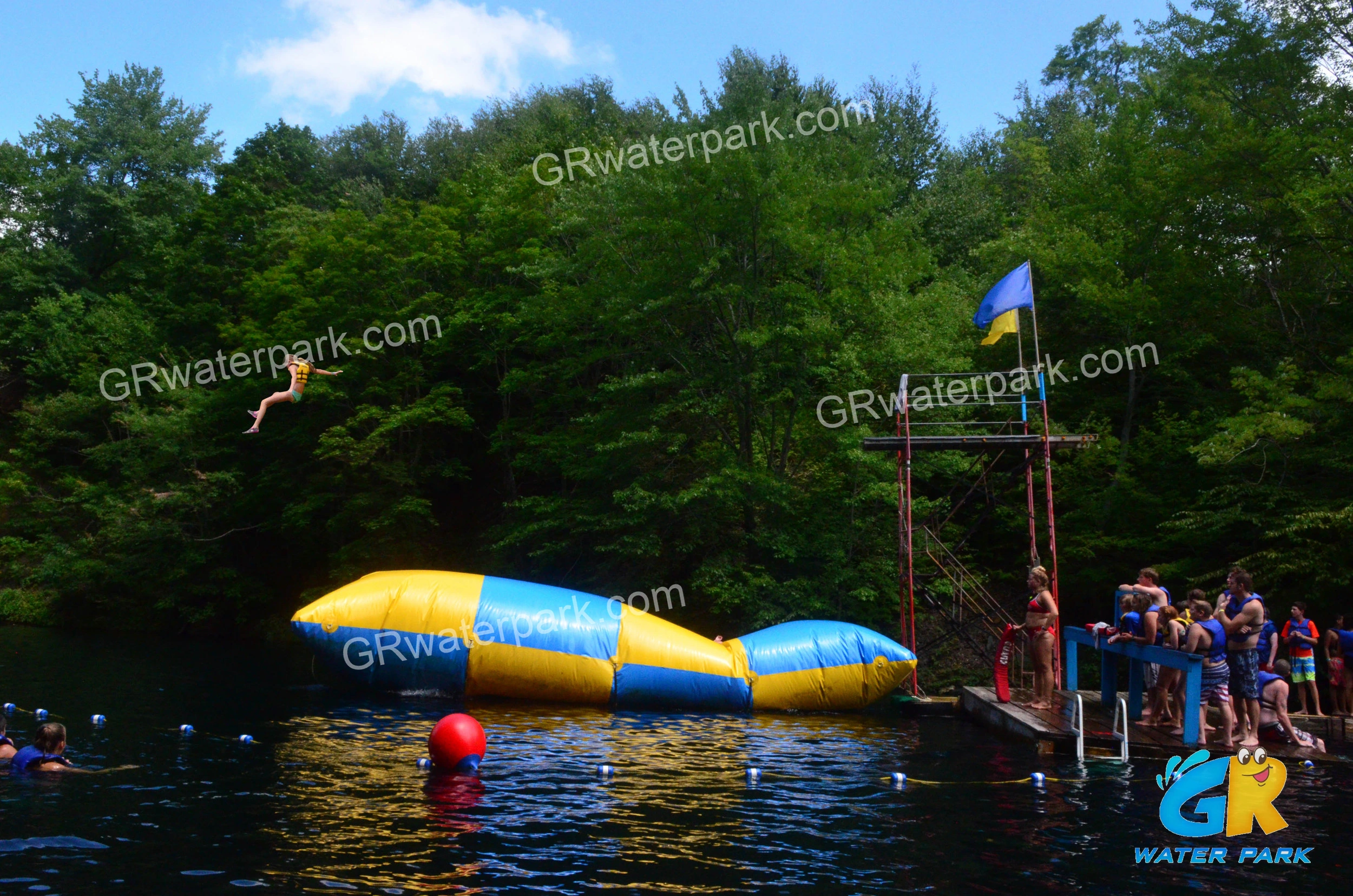
Woodland, a jetty and a blue-and-yellow jumping bag give these photographs a strong outdoor character. The appeal is visible in the shared anticipation around the water as much as in the individual moment of action.
A brief for a camp activity would begin with the wider programme: who takes part, how the group reaches the water and which experience the operator wants to add. The photographs provide inspiration for that conversation rather than a specification to copy.
DESIGN CONCEPT
Keep the activity and the place connected.
The concept brings a timber jetty, an inflatable bag and a wooded shoreline into one view. It helps make the relationship between arrival, the water area and the surrounding camp easier to discuss.
The design conversation can then focus on the relationship between the activity and the wider camp. The final layout, equipment and site requirements would be reviewed together before the proposal moves forward.
FACTORY MAKING
A closer look at the people making it.
The proposal has to become individual pieces that can be made. Material preparation, panel assembly and finishing bring a drawn shape into physical form; the construction method depends on the selected inflatable.
The GR factory views show the hands-on work behind our inflatables. They provide a starting point for discussing construction, appearance and the product information relevant to the equipment in a new proposal.
INSTALLATION PLANNING
Start with access to the water.
The wider customer view shows the bag in relation to the jetty and shoreline. That relationship is an essential part of understanding the setting before discussing how equipment would be brought to and installed at a site.
A marked site view helps bring arrival routes, equipment access and the surrounding activity spaces into the same discussion. Those practical details need to be considered with the selected product and the camp operator.
IN USE
The moment everyone remembers.
The action photographs capture participation at water level: the movement, the shared attention and the people around the activity. They make the outdoor experience more tangible than a layout alone.
Use these views to describe the kind of shared activity you have in mind. The next discussion can then focus on whether that direction fits your site and the requirements of the equipment you are considering.